

The Palm Issue #4: Many promises from PM Wong, but will there be real action?
PM Wong promises young Singaporeans more fulfilling lives and greater social mobility, but will real action follow?

Hello,
In this fourth issue of The Palm, we respond to the Prime Minister’s speech in Parliament, where he pledged to build Singapore with the youth in mind, and reiterate why a relook of the COE model is necessary.
Will real action follow after the PM’s speech?
In a wide-ranging speech on 24 September, Prime Minister Lawrence Wong addressed the key issues Singaporeans will be facing for the next 5 years, and promised younger Singaporeans that they would have more fulfilling lives, greater social mobility and stronger safety nets.
We appreciate the Government’s introspection and frank acknowledgement of the challenges faced by Singaporeans. What matters most is whether real action follows. The reality for many younger Singaporeans is endless competition and being stuck on a treadmill, a metaphor that PM Wong himself used.
The treadmill starts early in Singapore. EveryChild.SG found that primary school students face higher academic stress than peers abroad. This is partly because Singaporean students must sit for the high-stakes PSLE at age 12, much earlier than students in other countries. For instance, students in Hong Kong take their first national exam at 18. Despite PSLE reforms in 2021, tuition spending still rose 29% from 2018 to 2023. With rapid technological change reshaping jobs, the Government should further refocus our education system from examinations by creating alternative pathways beyond the PSLE, such as piloting a 10-year through-train programme in some schools as PSP previously proposed.
Housing remains a source of anxiety for young working Singaporeans seeking to fulfil themselves by starting a family. Since Q2 2020, the HDB Resale Price Index has increased by 53.8% in just five years. As the market prices of HDB flats soar, so does the amount HDB must pay into the Past Reserves for State Land used for Built-To-Order (BTO) flats. In Financial Year (FY) 2024/25, this amounted to $9.3 billion, up from $7.5 billion the year before. This bill must eventually be paid by taxpayers and flat buyers, which is not sustainable.
We believe that HDB should return to its originally intended role as a provider of affordable housing. That is why we have proposed the Affordable Homes Scheme (AHS) which prices BTO flats without land cost. Only those who subsequently sell their flats on the resale market, and thus derive financial benefits, would have to repay land cost with interest. We have also proposed the Millennial Apartments Scheme, where HDB will provide affordable, high-quality rental apartments for young Singaporeans to rent on leases of 2-5 years, allowing young Singaporeans greater flexibility in housing options.
In March 2025, then-Minister for National Development Desmond Lee objected to the AHS, arguing it would prevent HDB flats from serving as a “store of value for retirement”. However, he failed to note that retirement savings, in the form of CPF monies, are being used to finance large mortgages. High flat prices thus transfer CPF retirement savings into housing, and the value of these savings are “locked up” in the flat at old age. PSP’s AHS separates the policy intention of providing Singaporeans with affordable public housing from the policy intention of CPF, which is to provide an “assurance for retirement”. It will enable Singaporeans to retain more CPF savings and invest them in ways other than property ownership.
The AHS will not crash the resale market as the annual supply of AHS flats will be the same as today’s supply of BTO flats, keeping AHS flats under 10% of total HDB stock even after five years. Furthermore, flat sales below market prices will be discouraged because AHS flat owners must repay deferred land costs, while strong demand from those ineligible for BTO flats, Permanent Residents, upgraders, and location-driven buyers will sustain prices.
With rising unemployment rates among younger workers, soaring housing prices, and an increasing sense of financial insecurity, many young Singaporeans are understandably worried about their futures. It seems contradictory for the PM to say that “we must do everything we can” to defy global trends of “tang ping” and “quiet quitting”, and yet continuing to pursue the same economic model. A deeper re-evaluation of our economic structure, as we called for in Issue #1, is needed to improve prospects for younger Singaporeans.

By a 10-year-old who loves art.
Time to relook at the COE model?
The old “Singaporean Dream” of owning all 5 C’s - condo, cash, credit card, country club, and car - is dead. Part of this is due to record-high COE prices making car ownership a distant prospect for most Singaporeans. Against this backdrop, Workers’ Party MP Jamus Lim proposed a more equitable COE system in Parliament, one that factors in discounts for people with disabilities (PWDs), parents with young children, and caregivers.
Earlier this year, PSP’s then-NCMP Hazel Poa had made a similar call for a fairer and more equitable COE system, proposing a credit-based bidding model for Categories A, B and D COEs. COE credits would be distributed monthly to Singaporeans and PRs based on factors like family size, age, disability, and contributions. Credits can be used to bid for COEs, gifted to others, or sold, allowing those who opt not to buy cars to use their COE credits to offset the costs of public transport. She also proposed a levy for additional vehicle purchases, similar to additional buyer’s stamp duty (ABSD), to increase the cost of multiple car ownership for wealthy households.
Regrettably, both proposals by the WP and PSP were rebuffed by the Government as being “subjective, divisive and benefit too few”, and with questions of “how do we pass such judgment on who needs a car more”. But the Government regularly passes judgment on who needs something more. This is most evident in our public housing policies. Priority schemes like the Family Care Scheme (Proximity) and the Third Child Priority Scheme (TCPS) explicitly grant eligible families a better chance of securing a flat than other families or singles. Various levels of tax reliefs are available for different groups like NSmen or working mothers. If we can identify groups of people with greater need for housing or tax relief, why would it not be possible to do the same for cars?
Besides the proposals discussed above, PSP’s then-NCMP Leong Mun Wai has also questioned whether the quota for Category E (Open Category) COEs can be re-allocated to other categories to increase the affordability of mass market and commercial vehicles. PSP has also supported the creation of a separate COE category for private-hire vehicles, even though the Government has since rejected this proposal. Singaporeans, too, have contributed other ideas, such as yearly COE renewals to lower the cost for seniors, and basing COE categories on the Open Market Value of a vehicle.
This shows that there are many ideas out there on how we can reform the COE system. It is time for the Government to have a serious discussion with Singaporeans on the COE system and make it work better for Singaporeans, so that we can achieve progress for all.
PSP On The Ground
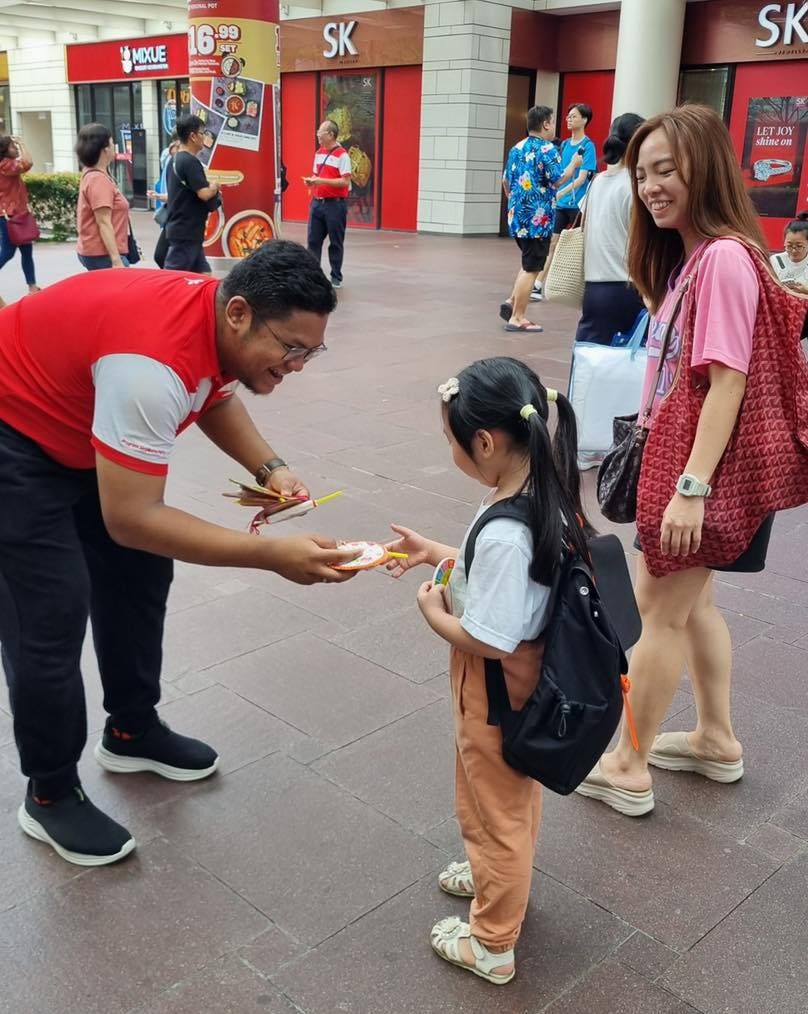
PSP’s Pioneer SMC team was at Jurong Point on 28 September to distribute traditional paper lanterns to residents to celebrate the upcoming Mid-Autumn Festival. We were happy to play a part in passing down this festive tradition to a new generation of young children!
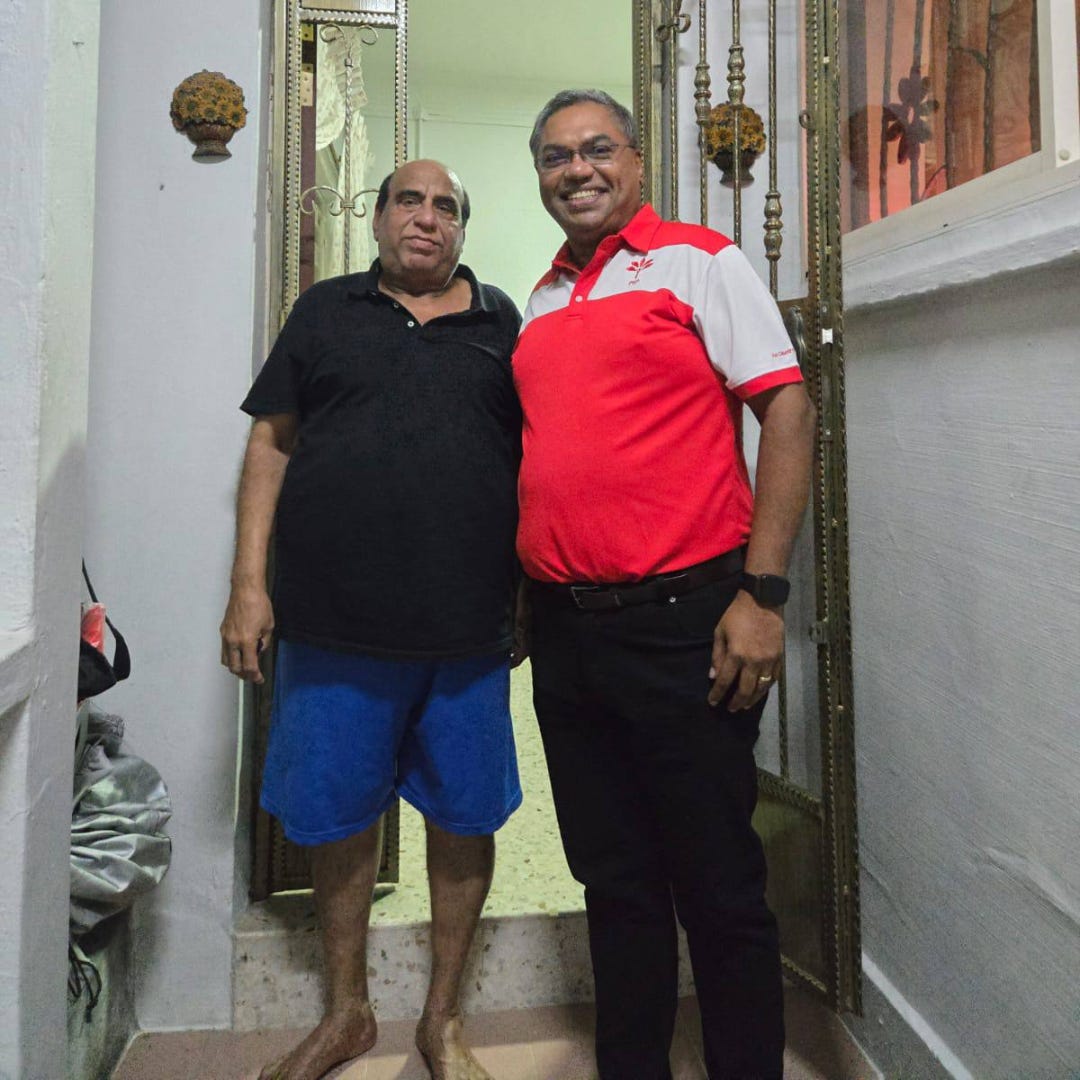
CEC member Sani Ismail also led a team of volunteers to visit residents at Blk 517 Jurong West St 52 and distribute magnets on 30 September.
If proposals are good, can convince people directly even if government chooses to ignore. I just find the housing proposal still a little too hard to understand. The reality is that people do benefit from making money off from resale HDB and it is actually a form of wealth generation if it is sustainable. It would be hard to argue from a position where people are actually not encouraged to sell their HDB flats. Hope PSP can simplify their housing proposals and include a 1-1 flat replacement with a fresh 99 years lease when government is taking back HDB flats through VERS and also when the 99-years lease is up. While affordability of HDB flats is the number one concern, another crux of the matter for HDB flats will be how to retain their role as assets for Singaporeans. That is actually more important for most Singaporeans since despite high BTO prices, you can expect the current government to make it viable for people to purchase the flats through rather inferior methods like making flats smaller for example. The concern is the government seems keen to sweep up HDB flats at prices well below market prices later or even let values of HDB flats drop to zero when the leases are up. This instinct of the government is definitely detrimental to the people and it is shocking that the government can even have such an approach.