

The Palm Issue #5: Fare hike, stressed teachers, and no more canteen vendors
We question the rise in public transport fares amidst falling train reliability, and ask whether high workloads for teachers and the shift to centralised catering in schools are inevitable.

Hello,
Today is Deepavali, a day that symbolizes the victory of good over evil and knowledge over ignorance. We would like to wish all our readers who celebrate a very happy festival of lights. Deepavali Valthukkal!
In this fifth issue of The Palm, we respond to the public transport fare hike and issues in education, including a recent report on teachers’ workload and schools switching to central kitchen catering.
Fare hike: rubbing salt in the wound for Singaporeans
The Public Transport Council’s announcement of a fare hike amidst record COE prices, persistent cost-of-living challenges, and over 20 train disruptions recorded this year feels especially jarring.
Public transport is the only option for many Singaporeans to get around Singapore. It must stay affordable and reliable, especially with private vehicle ownership increasingly beyond reach.
The decision to hike express bus fares by up to 50 cents is especially questionable. Of the 14 new bus services introduced under the Bus Connectivity Enhancement Programme in the past year, six are express services that charge higher fares. Will such a sharp further increase in fares not further jeopardise ridership for a segment that we should be encouraging, especially since express buses are not covered by monthly travel passes?
PSP is heartened that the price of the Adult Monthly Travel Pass has been reduced from $128 to $122. However, this still represents a significant upfront cost for many lower-income commuters. We call on the Government to go further and consider implementing automatic fare capping at a daily limit, such as $4 per day. This would be similar to fare caps in cities like New York and London that have made public transport more equitable.
Affordability and reliability must remain the highest priorities in our public transport policy, if we are to be a We First society focused on ensuring progress for all.
Are teachers’ high workloads inevitable?
The recent OECD Teaching and Learning International Survey (TALIS) has resurfaced the severe workload and stress faced by Singaporean teachers, despite the Ministry of Education’s (MOE) efforts to reduce administrative duties.
The survey’s findings are sobering, particularly for younger educators. 40% of teachers under the age of 30 plan to leave the service within the next five years. This group also reported feeling severe stress more often than their colleagues aged 50 and above, suggesting that the system is placing immense pressure on younger teachers in particular.
Ironically, one stressor is MOE’s push for new technology. Platforms like the Student Learning Space (SLS), intended to “customise and create meaningful learning experiences,” often inadvertently increase workload. Teachers must redesign lessons for these systems, a burden that is more likely to fall on younger teachers, who are often seen as more ‘tech-savvy’ and ‘energetic’. Furthermore, extra training for new technologies, such as Artificial Intelligence, adds to teachers’ already long hours.
Another source of stress is how teachers’ performances are appraised, which former MP Louis Ng has called “a competition”. MOE’s Enhanced Performance Management System (EPMS) is a stack-ranking system that evaluates teachers relative to their peers of the same rank, which means teachers not only worry about doing their job well, but also about doing it better than their colleagues. This pressures them to spearhead projects and events that may feel “pointless“ or “have little relevance to teaching and learning” to stand out. This pressure is particularly intense for younger teachers, as a low grade early on could severely jeopardise their career progression.
Ultimately, as we have previously discussed, stress is endemic in Singapore’s education system. With students and parents all engaged in intense competition through high-stakes examinations, it is not surprising that this would have knock-on effects on our teachers. We urge MOE to recognize this system-wide issue and implement holistic solutions to reduce academic stress for everyone in the education ecosystem: teachers, parents, and students.
Will centralised catering solve the problem of affordable, nutritious food for schoolchildren?
In recent years, schools have faced a shortage of canteen stallholders. Despite nominal rents, many school canteen vendors struggle with rising costs, as they cannot increase prices without school approval. Consequently, 13 Singapore schools will transition to a central kitchen catering model starting in January 2026. Under this new system, parents and students will pre-order meals which are prepared by a single operator in central kitchens and then delivered to schools.
The situation of school canteen stallholders is not unlike that of hawkers at social enterprise hawker centres, who are often contractually required to sell “budget meals” while facing the same pressures of rising costs. In both cases, the burden of keeping food affordable has fallen unfairly on the shoulders of small stallholders, instead of being better shared by the wider system including consumers and the Government.
It is time to reconsider whether the responsibility for ensuring affordable and nutritious food for our children—and the wider public—should continue to be placed on the shoulders of individual, small-scale stallholders, when this is a matter of public good. PSP believes that schools, or MOE, can consider contracting individual hawkers to operate a central kitchen to sell one high-quality, standard meal to all students. Under this approach, every student receives the same healthy meal regardless of their family’s income, while creating a more efficient system with economies of scale for individual hawkers to operate in schools. At the same time, such smaller-scale central catering would reduce the risk of larger-scale foodborne illness incidents that industrial central kitchens pose, something which the Government has acknowledged.
If schools choose to retain the individual stallholder model, there are practical policy solutions that can help lower operating costs for stallholders. In November 2024, PSP proposed that the Government should set up a centralised procurement system to secure essential ingredients, such as rice, cooking oil, and flour, for hawkers at lower wholesale prices. Such a system should also be extended to school canteen vendors.
It is time for the Government to step up and provide the necessary structural policy support to provide affordable, nutritious food for all Singaporeans, especially our children. This should be a shared public responsibility, not one that falls largely on individual stallholders or hawkers.
PSP On The Ground
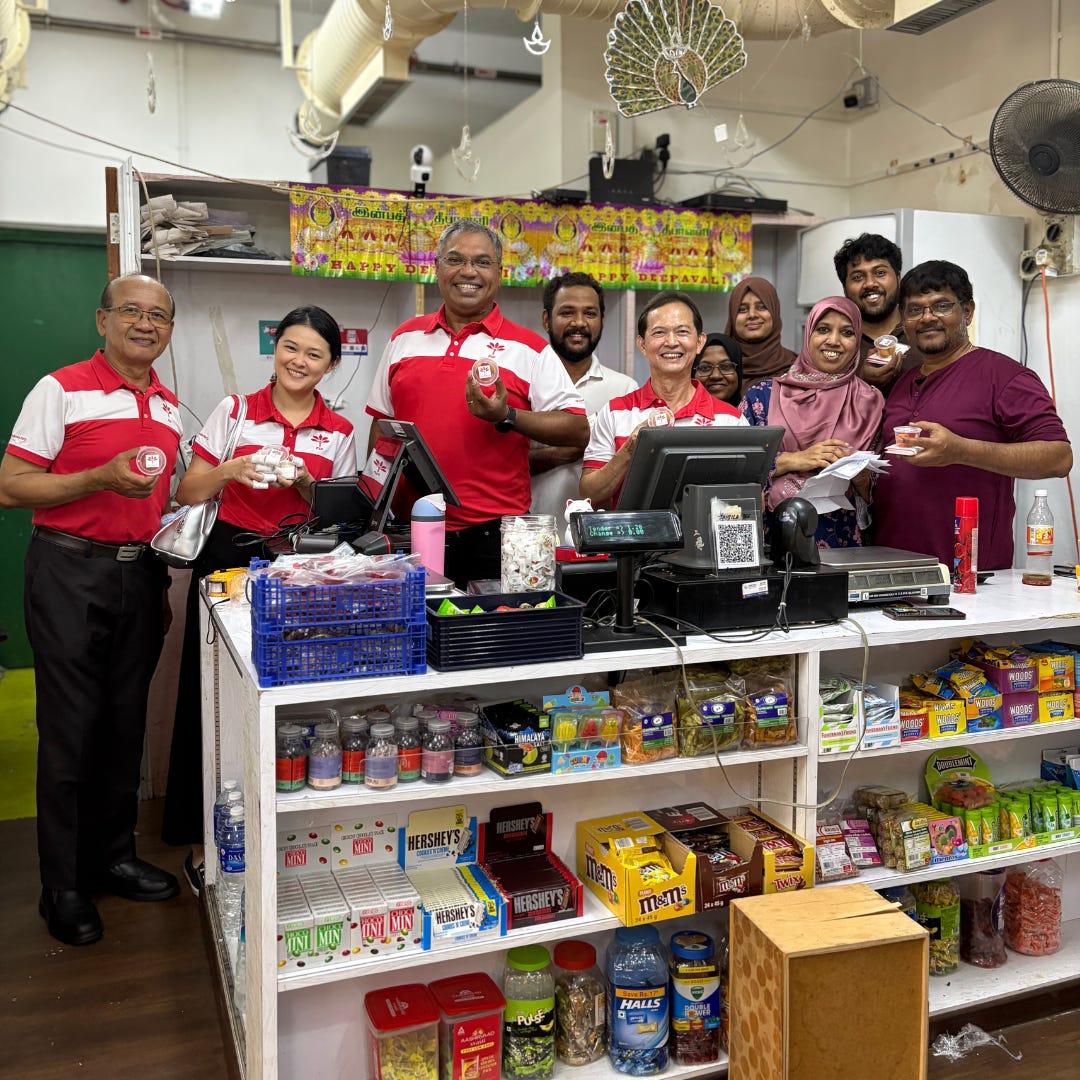
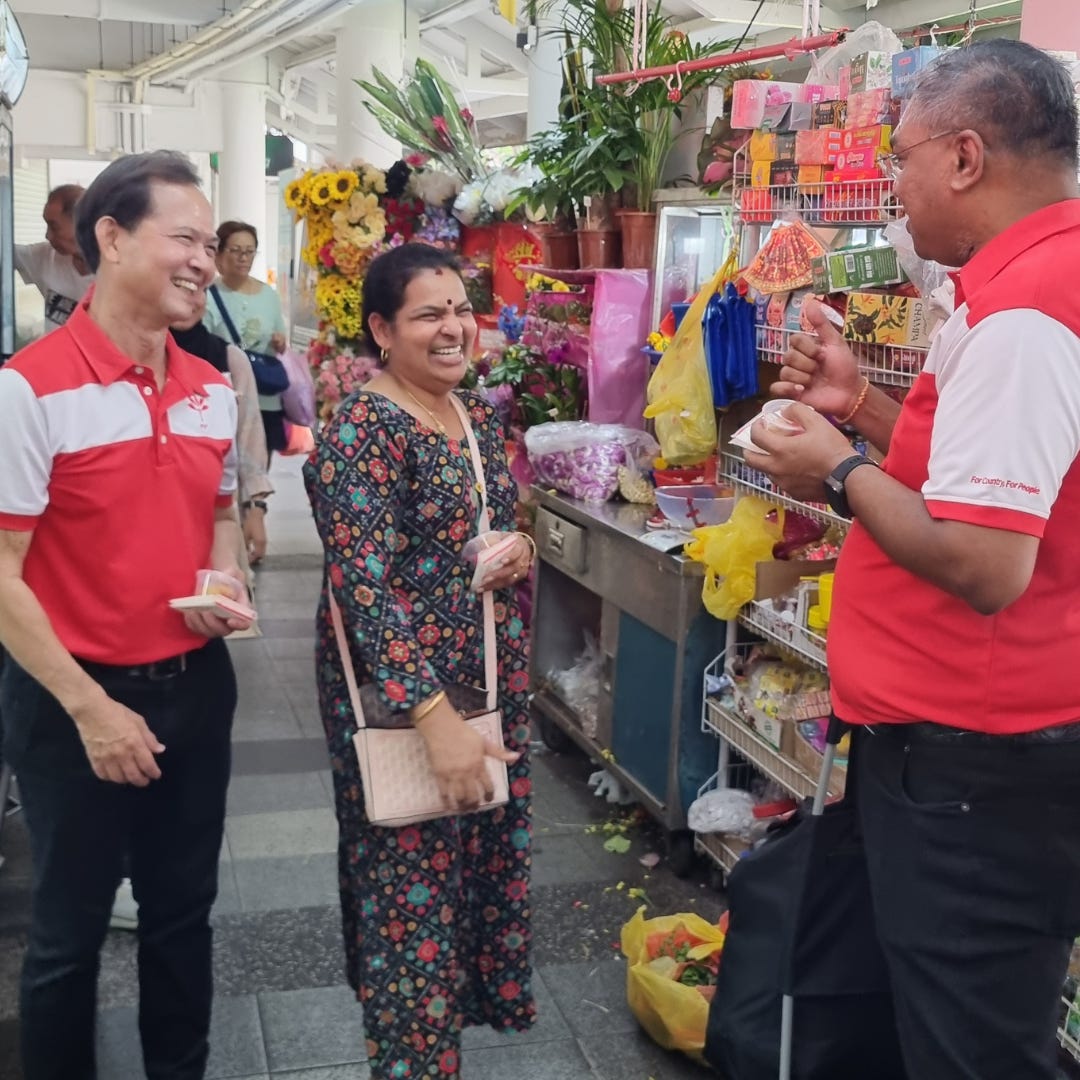
Team PSP, led by Chairman A’bas Kasmani and Secretary-General Leong Mun Wai, distributed 1,000 tubs of traditional Indian sweets to spread the joy of Deepavali with residents at various Indian minimarts across West Coast-Jurong West GRC on 19 October. We thank the generous donor who made this event possible! If you would like to help sponsor a future event, we welcome you to write to us.
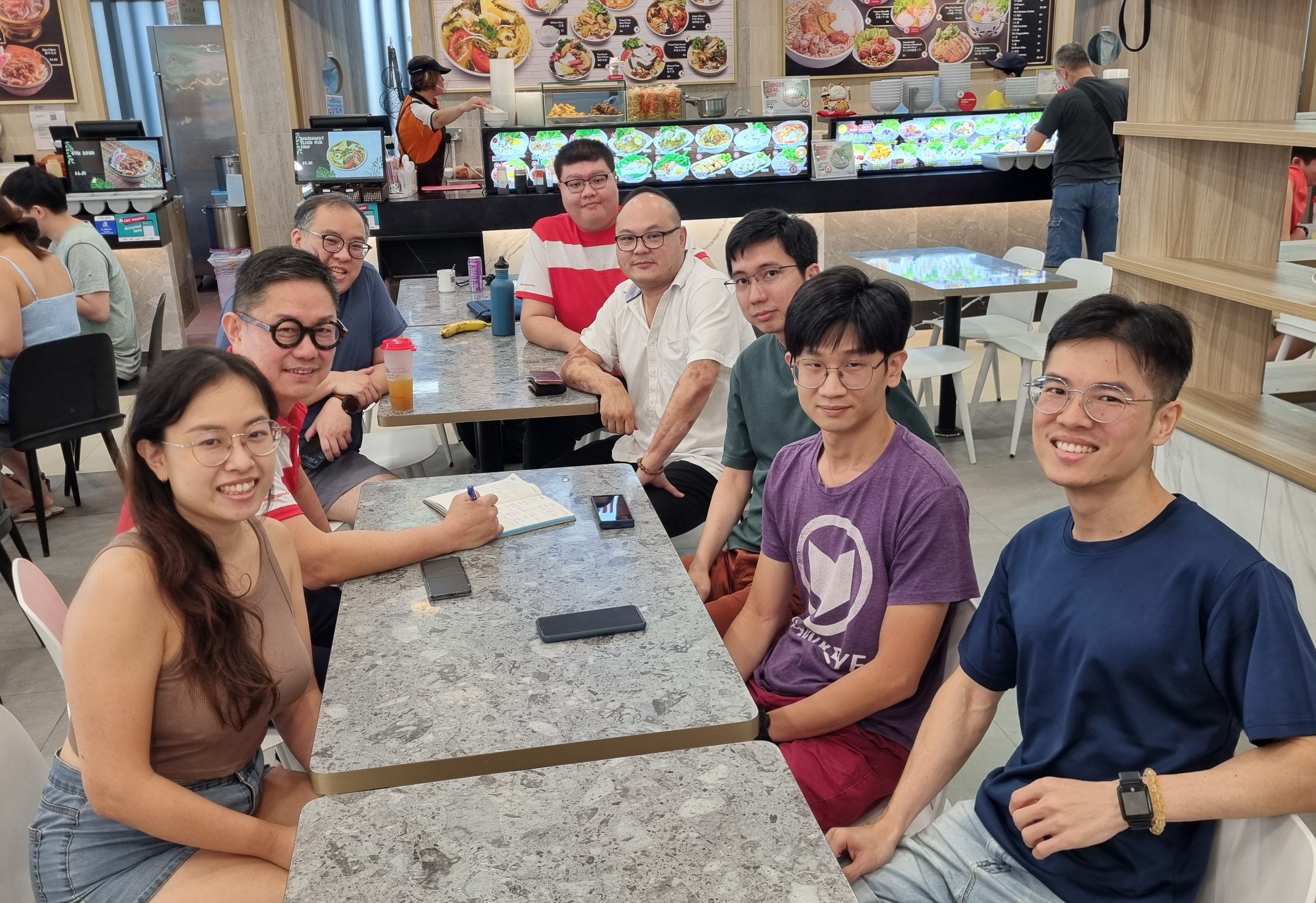
Also on 19 October, one of PSP’s former candidates for Chua Chu Kang GRC, Lawrence Pek, met a group of Tengah residents facing issues such as constant dripping with their central cooling systems supplied by SP Group. The plight of one of these Tengah residents, whom Lawrence has been supporting since 2024, was recently reported in the media. Lawrence has committed to continue meeting and supporting him and other Tengah residents who have had their quality of life negatively affected by problems with their central cooling systems.
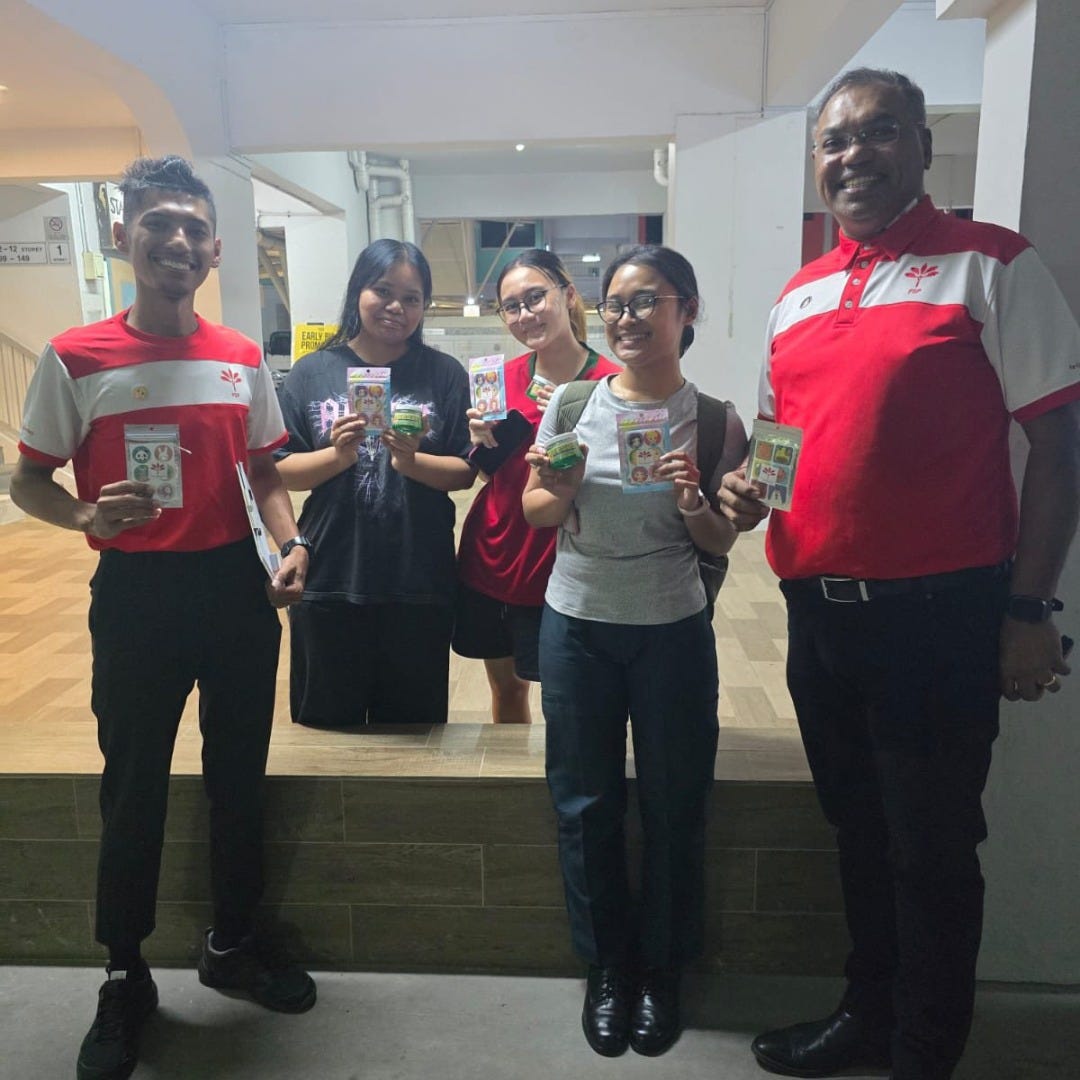
Last week, Sani Ismail, one of our former candidates for West Coast-Jurong West GRC, distributed mosquito repellent at Jurong West St 73 and Jurong West St 81, where dengue clusters were recently reported.