

The Palm Issue #9: Food poisoning at RVPS, LO removed, are NMPs independent, ministerial salaries, BTO supply
We share our thoughts on what has been a blockbuster fortnight in Singapore politics.

Hello,
In this ninth issue of The Palm, we share our thoughts on several key issues in a blockbuster fortnight in Singapore politics: the removal of Mr Pritam Singh as the Leader of the Opposition, the suspected food poisoning case at River Valley Primary School and the controversy over canteen food, the review of ministerial salaries, the Nominated MP scheme, and the number of BTO flats to be launched this year.
Does the office of Leader of the Opposition normalise political opposition or our one-party dominant system?
On 15 January, the Prime Minister removed Mr Pritam Singh as Leader of the Opposition (LO), after Parliament voted the day before that he was unsuitable to continue as LO following his conviction for lying to the Committee of Privileges.
In Singapore, the Office of Leader of the Opposition is a position in the gift of the Prime Minister. It has not been institutionalised within the Standing Orders of Parliament, or the Constitution. This is regrettable and not in line with conventions in other Westminster Parliaments. The Progress Singapore Party (PSP) believes that the Leader of the Opposition should be chosen by opposition MPs, as the name implies. Parliament should also be the institution setting the eligibility conditions for someone to serve as the Leader of the Opposition, not the Prime Minister.
We believe that the LO position, in its current form, does not normalise the existence of political opposition in our political system. As a position that can be offered and withdrawn at the discretion of the ruling party, it instead normalises our one-party dominant system. This is not what we want for Singapore.
Does the Nominated MP scheme remain credible?
By Leong Mun Wai
I attended the sitting of Parliament on Wednesday in support of the Workers’ Party and the Opposition. I listened to all the speeches, including those by the Nominated MPs (NMPs).
The NMPs who spoke have fine backgrounds. One of them is a Senior Counsel. They can add value to Parliament. But their participation in the debate on the motion on Pritam Singh’s suitability to serve as Leader of the Opposition has further damaged the credibility of the NMP scheme.
On paper, NMPs do not belong to any political party. Their participation in the debate helps to undercut criticism that the motion is a partisan hit job.
But in reality, NMPs are appointed by a Select Committee of Parliament that is dominated by PAP MPs. Their presence in Parliament is arguably in the gift of the ruling party, similar to the office of the Leader of the Opposition.
One of the new NMPs sworn in this week was formerly a PAP member who reportedly even attended one of the PAP’s tea sessions designed to identify potential candidates for elections.
In the last term of Parliament, we also saw an NMP resign and subsequently be elected as a PAP MP. This has never happened before. He is now an office holder, a Senior Parliamentary Secretary.
Additionally, since the vote on the repeal of Section 377A of the Penal Code in 2022, no NMP has taken a different voting position from the PAP MPs.
These recent developments have diminished public confidence in the NMP scheme as a non-partisan institution. If former NMPs are allowed to stand for election under a political party, and former political party members are allowed to be appointed as NMPs, can the public continue to trust that NMPs are not partisan in heart and spirit during their tenure? When NMPs speak, can the public believe that they are not speaking to audition for elected office in the future?
The best and most legitimate way for Singaporeans’ views to be represented in Parliament is through elected MPs who are directly accountable to voters. If the NMP scheme is to continue, its independence and non-partisan nature must be further strengthened in law, starting with a reform of the selection process. Otherwise, its role and relevance should be seriously reconsidered.
Where is canteen food headed?
By Stephanie Tan
I am deeply concerned by the suspected food poisoning of 60 River Valley Primary School students after they had lunch provided by the school’s central kitchen meal model operator.
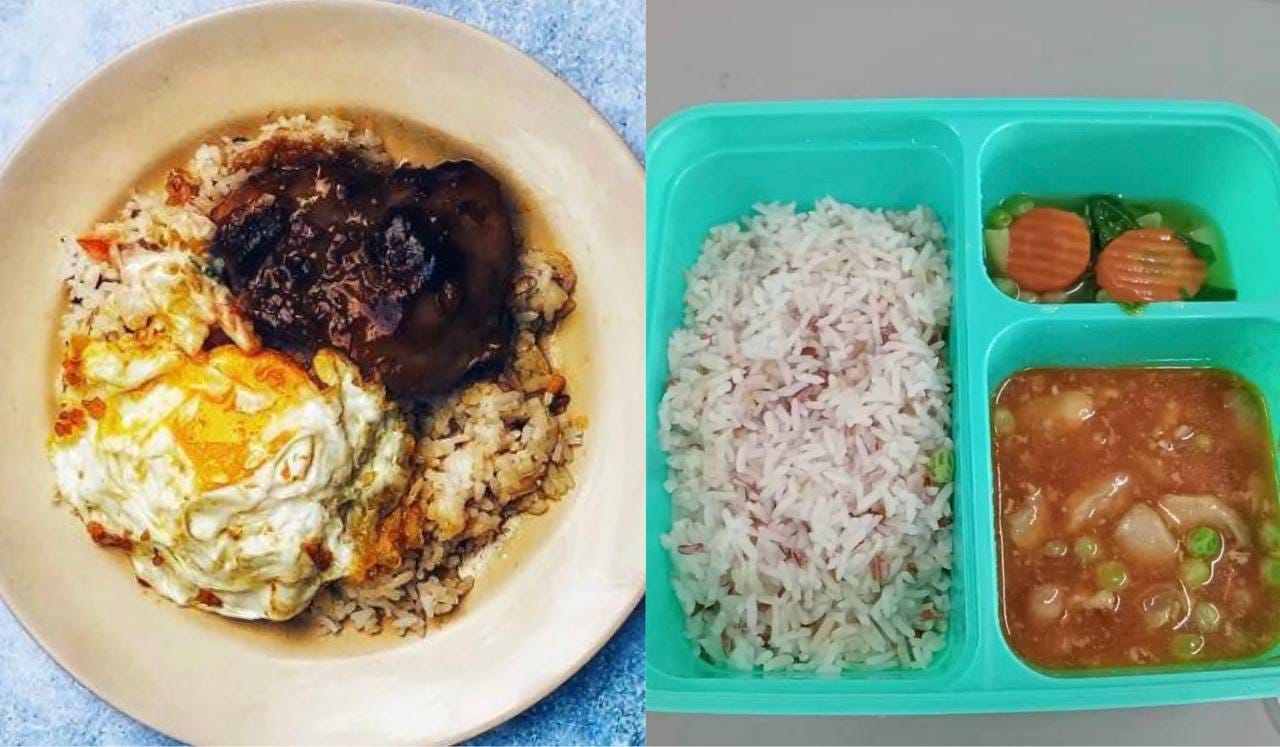
Food safety now adds to the growing list of concerns about the new central kitchen meal model, which the Ministry of Education, Singapore (MOE) rolled out to 13 schools across Singapore this year.
Students have already expressed dissatisfaction with the taste and quality of packed bentos and food dispensing lockers. Photos of the student meals at Hwa Chong Institution (HCI) have gone viral, due to their unappetising presentations and reminiscence of SAF cookhouse meals. Students from other schools have also raised issues with cold food and missing items. Operators have also faced questions about whether preparing food off-site would lead to compromises in freshness and food quality. These fears have apparently been realised.
In a previous issue of The Palm in October 2025, the PSP had suggested an alternative system where central kitchens operate within each school rather than from some industrial facility, following the examples of schools in Japan and Sweden. Not only will this ensure that food is cooked fresh on site, it can also balance the need for economies of scale that singular canteen stalls cannot achieve.
There is more to a school canteen than nutritional values or Health Promotion Board advisories. Our canteen ‘uncles’ and ‘aunties’ represent a human touch that have been sorely missed by students transitioning to the central kitchen model. For the longest time, our school canteens have been a microcosm of our own hawker culture, exposing students to a variety of local dishes from a young age. For many students, their school canteen is also the first time they learnt to buy things on their own and manage their own expenses. These are precious holistic developmental experiences that should be retained.
I hope Minister Desmond Lee urgently looks into alternatives to the central kitchen meal model.
Why review ministerial salaries now?
By Lawrence Pek
The Government has announced that it has convened an independent committee to review the salary framework of political office holders, which was established by a review committee in 2012. At the time, it was recommended that the framework would be reviewed every five years, and the Government agreed with this. A committee was formed five years later, in 2017, to review the framework, but not in 2022.
In 2023 and 2024, when PSP’s then-NCMP Hazel Poa asked whether ministerial salaries would be reviewed, the Government said it would defer the review as we have other pressing issues to deal with and significant uncertainties and downside risks in the global economy remain.
These key challenges have remained unchanged, and still require the Government’s attention. For example, unlike Thailand, Malaysia, Cambodia and Vietnam, we have yet to strike a trade deal with the US since tariffs were imposed in 2025, despite two key ASEAN meetings in May and Oct 2025 in Kuala Lumpur.
Since the reasons previously given by the Government to postpone the review remain unchanged, what has changed to merit a review of ministerial salaries now? Singaporeans deserve more clarity from the Government on this. On our part, we hope that the review will peg ministerial salaries to the median incomes of Singapore Citizens instead of the incomes of the top 1,000 Singapore Citizen earners, to better reflect the spirit of public service.
Are 19,600 BTO flats per year enough to meet demand?
The Government has announced that it will launch about 19,600 Build-To-Order (BTO) flats in 2026. Minister Chee Hong Tat has framed this as a “strong supply” of BTO flats that will “make them more accessible to buyers”.
However, a simple reality check on demand suggests the gap may still be significant. Based on the latest official population data, Singapore had about 3.66 million citizens and 0.54 million permanent residents as of June 2025, and every year, about 23,000 citizen couples register their marriages. Newly-wedded citizen couples form the bulk of potential BTO seekers, a pool that also includes singles and seniors. From this, we can see that the potential pool of BTO applicants exceeds the annual BTO launches.
Another way to view the strain on supply is through BTO waiting times. Although median waiting times have eased somewhat from pandemic peaks, it remains at about 4 years. A queue measured in years implies a backlog of demand that simply launching 19,600 units a year will not clear.
If the Government’s goal is genuinely to make public housing more accessible, the supply strategy needs to be explicitly tied to demand metrics, such as cohort sizes, marriage rates, and waiting-time targets rather than just headline launch numbers.